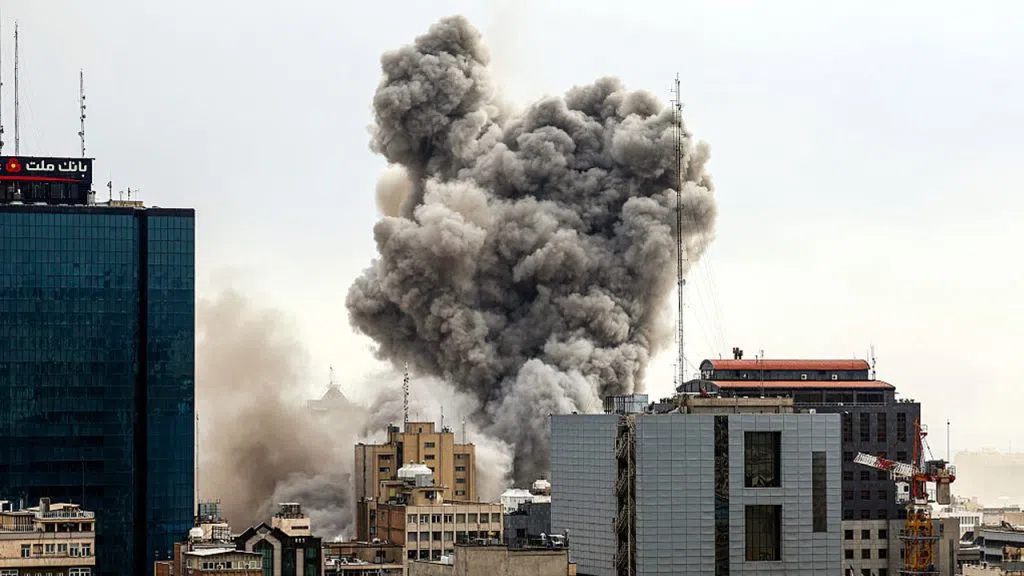
IRAN ~ Hellfire continues to shroud the skies of the Middle East after the U.S. and Israel launched offensive air strikes on Iran, triggering a response by launching retaliatory missile barrages at Israel and U.S. military bases and energy centers across the region.
The Iranian Red Crescent Society has confirmed the deaths of 787 people from the airstrikes, including the assassination of Iranian Supreme Leader Ayatollah Ali Khamenei and 165 people in Shajareh Tayyebeh girls’ elementary school in Minab. The Pentagon reported that six American military personnel have been killed as of Tuesday morning from Iran’s military response.
PODCASTS:
March 3, 2026 ~Managing Director and portfolio manager at Ancora Bloomfield Hills David Sowerby discusses how the market is reacting to the Iranian conflict.
March 3, 2026 ~ Congressman Tim Walberg joins Kevin Dietz with reaction to the U.S. strike on Iran, what he’s hearing from Washington, and how this escalates tensions in the region. Walberg breaks down the risks, the strategy, and what Americans should expect next.
March 3, 2026 ~ Chris Renwick, Lloyd Jackson, and Jamie Edmonds spoke with Michigan Congressman John James (MI-10). He discussed U.S. strikes on Iran and his campaign for governor.
March 2, 2026 ~ Osama Siblani, publisher of The Arab American News, joins Ryan Ermanni to discuss the latest developments in the U.S.-Israel strikes in Iran that began over the weekend.
March 2, 2026 ~ Congressman Shri Thanedar (MI‑13) gives his view from Capitol Hill on the U.S.–Israeli strikes on Iran and how Michigan communities could be impacted.
March 2, 2026 ~ Political analyst and Oakland University professor Dave Dulio breaks down how the Iran strike could shape the midterms, particularly in Michigan.
(CONTINUED) These deaths occurred among personnel based in Kuwait, according to multiple defense officials, with this country also seeing a reported “friendly fire incident” that downed three U.S. fighter jets Monday morning. Footage shows pilots parachuting from a jet spiraling to the ground, with all crew reportedly surviving the incident.
President Donald Trump spoke at a Medal of Honor ceremony on Monday, awarding three medals and addressing the volatile situation in the Middle East. “An Iranian regime armed with long-range missiles and nuclear weapons would be an intolerable threat to the Middle East, but also to the American people,” he claimed during his speech. “Our country itself would be under threat, and it was very nearly under threat.” He added that the military campaign could last for at least 4-5 weeks.
In response to the joint Israeli-U.S. airstrikes, Iranian forces launched waves of missiles and drones at U.S. and Israeli positions across the region, striking targets in Israel, Cyprus, the United Arab Emirates, Bahrain, Kuwait, Qatar, Saudi Arabia, and Jordan. Saudi Arabia reported that two Iranian drones struck the U.S. embassy in Riyadh, though it only sustained minor damage. Iran’s targeting of energy infrastructure and closure of the Strait of Hormuz have caused a global surge in oil prices.
Israeli officials said their forces have intensified strikes on Tehran, while air-defense systems across the Middle East continue to intercept incoming fire, causing concern of falling shrapnel onto civilians in these countries.
Following the killing of Khamenei, reports of 23 people being killed have emerged from Pakistan after protestors stormed a U.S. consulate in the city of Karachi. Iraqi police also dispersed a protest with teargas near a U.S. embassy in Baghdad.
The current conflict followed months of rising tension over speculation of Iran’s nuclear program and a breakdown in diplomatic talks. Trump has also encouraged Iranian citizens to “take back your country” amid riots and protests against the Iranian government. Iran’s Foreign Minister Abbas Araghchi wrote a similar statement Monday on his X account, saying, “American people deserve better and should take back their country.“
PODCASTS
March 3, 2026 ~ Congressman Tim Walberg (MI-5) joins Kevin Dietz with reaction to the U.S. strike on Iran, what he’s hearing from Washington, and how this escalates tensions in the region. Walberg breaks down the risks, the strategy, and what Americans could expect next.
March 3, 2026 ~ Congresswoman Debbie Dingell (MI-6) joins the show with her perspective on the U.S. strike on Iran, what Congress is being briefed on, and the political stakes as tensions rise.
March 4, 2026 ~ Chris Renwick, Lloyd Jackson, and Jamie Edmonds speak with Erfan Omid, a Michigan State PhD student, who discusses the conflict with Iran and ongoing protests.
March 1, 2026 ~ U.S. Senator Gary Peters joins WJR’s special coverage to share his concerns about the U.S. strikes on Iran, the heightened threat environment at home, and the need for clearer communication from the administration. He discusses why he believes Congress should have a more defined role in authorizing military action and raises questions about the intelligence behind the president’s decisions.