PODCASTS:
Feb. 25, 2026 ~ Chris Renwick, Lloyd Jackson, and Jamie Edmonds spoke with Jason Roe of Roe Strategic. They discussed whether President Donald Trump’s speech helped Republicans.
Feb. 25, 2026 ~ Chris Renwick, Lloyd Jackson, and Jamie Edmonds discuss the State of the Union. White House Deputy Comms Director Kaelen Dorr joins to share the administration’s goals for the speech.
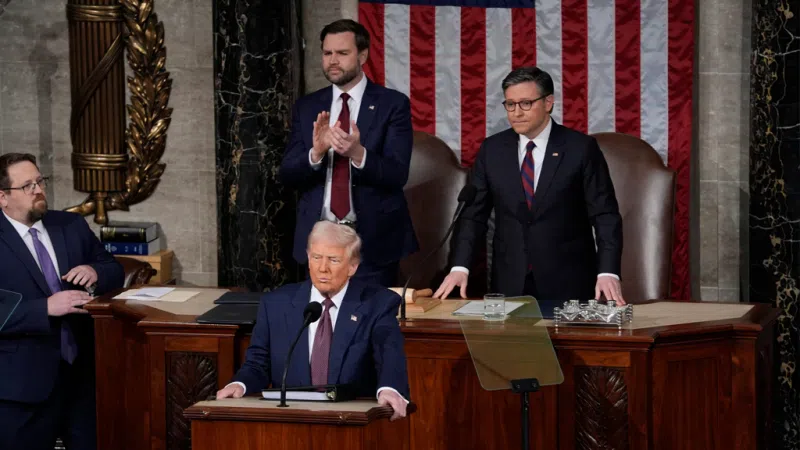
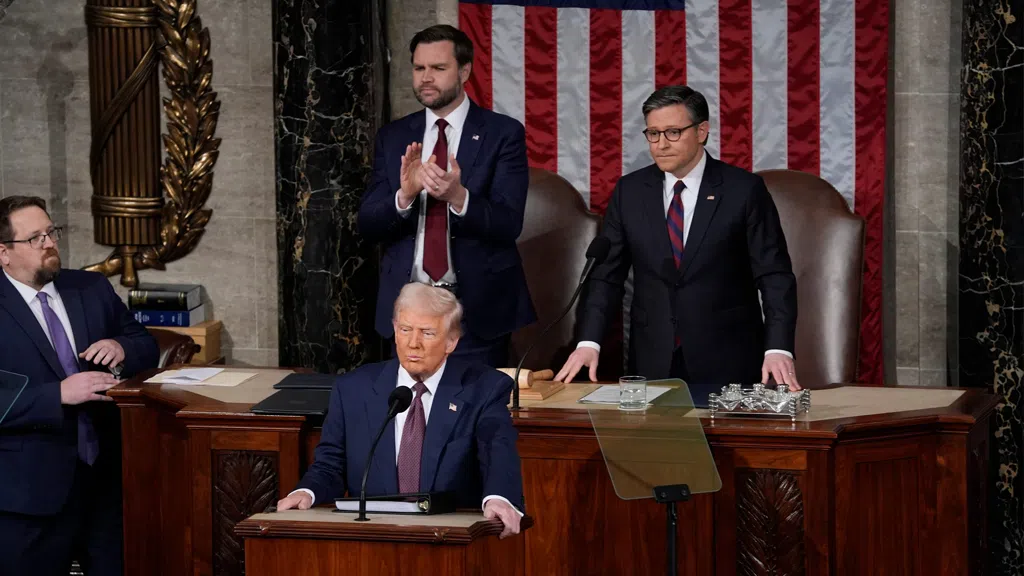
WASHINGTON ~ President Donald Trump opened the longest State of the Union address in U.S. history by touting what he called sweeping accomplishments from his first year back in office, saying “our nation is back, bigger, better, richer, and stronger than ever before.”
Visible partisan fractures surfaced almost immediately as Trump sparred with Democrats who sat silent or openly protested his remarks. He said they “should be ashamed of themselves” and argued his administration arrived “just in the nick of time” to stop what he described as national decline. The tension escalated when Rep. Ilhan Omar shouted “you have killed Americans,” joined at times by Rep. Rashida Tlaib, whose interruptions drew chants of “USA” from Republican members. Earlier in the evening, Rep. Al Green was escorted from the chamber after holding up a protest sign, underscoring how quickly the address became a flashpoint for partisan confrontation.
VIDEO
Feb. 24, 2026 ~ Live from the Capitol, President Trump delivers his 2026 State of the Union address, followed by the formal Democratic response by Virginia Governor Abigail Spanberger.
(CONTINUED) Despite the clashes, the room did find moments to unite, especially when the recently victorious U.S. men’s Olympic hockey team entered the chamber wearing their gold medals from their win over Canada. The appearance drew a bipartisan standing ovation as Trump praised their overtime victory and announced that goaltender Connor Hellebuyck would receive the Presidential Medal of Freedom for his performance. The president also spotlighted individual acts of heroism, awarding the Legion of Merit to Coast Guard rescue swimmer Scott Ruskin for saving more than 160 people during catastrophic Texas flooding and presenting the Congressional Medal of Honor to Chief Warrant Officer Eric Slover for his actions during the raid that captured Venezuelan leader Nicolás Maduro.
Trump paired these ceremonial moments with a slate of new policy directives, beginning with a plan to require major technology companies to generate their own power for AI data centers in order to guard nearby communities from rising electricity costs. He also announced what he called a nationwide “war on fraud,” to be led by Vice President J. D. Vance, asserting that widespread abuse of public programs could be reduced significantly with tougher enforcement. The president pressed Congress to codify his prescription drug pricing and transparency rules and reiterated support for national voter identification and citizenship requirements, which he framed as essential safeguards for election integrity. He further vowed to “never allow” Iran to obtain a nuclear weapon while describing ongoing negotiations and insisted that sustained military strength has deterred wider conflict.
Trump ended the address by urging lawmakers to approach the months ahead with what he described as a renewed sense of national purpose, framing the country’s 250th anniversary as an opportunity to set aside political divisions and focus on long‑term stability. His final appeal left Congress weighing both the legislative battles still to come and the broader question of how his agenda will move through an increasingly polarized political climate.