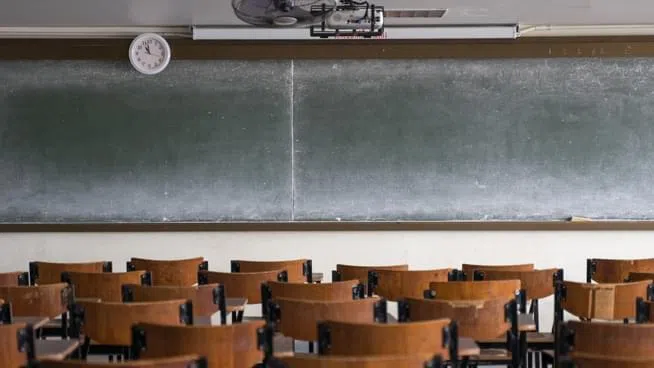
 Governor Gretchen Whitmer today signed Executive Order 2020-35, which orders all K-12 school buildings to close for the remainder of the school year — unless restrictions are lifted — and ensures continuing of learning by setting guidelines for remote learning. District facilities may be used by public school employees and contractors for the purposes of facilitating learning at a distance while also practicing social distancing.
“My number one priority right now is protecting Michigan families from the spread of COVID-19. For the sake of our students, their families, and the more than 100,000 teachers and staff in our state, I have made the difficult decision to close our school facilities for the remainder of the school year,” Governor Whitmer said. “As a parent, I understand the challenge closing schools creates for parents and guardians across the state, which is why we are setting guidelines for schools to continue remote learning and ensuring parents have resources to continue their children’s education from the safety of their homes. There is no video chat or homework packet that can replace the value of a highly trained, experienced teacher working with students in a classroom, but we must continue to provide equitable educational opportunities for students during this public health crisis.”
The Michigan Association of Intermediate School Administrators and the Michigan Council of Charter School Authorizers are currently developing a Continuity of Learning Plan template application for schools to utilize in order to create their localized plan. The application will be made available by April 3. District plans will need to detail how districts will provide opportunities for students to learn remotely and how schools will manage and monitor their progress. It will also provide information on how parents and guardians can learn more about the local plan. Each district must have its plan approved by their regional intermediate school district before being implemented. Public school academies must have their plans approved by their authorizer. Districts can also partner with one another to create joint plans.
Every district’s plan will be different and will reflect what’s best and feasible for their community. A plan can include learning by any number of modes of instruction delivery, including a hybrid approach. However they are designed, districts must ensure their plans are appropriate, equitable and accessible for students and families.
If the plan relies on some online instruction, the district should ensure every student who needs it has access to an appropriate device with an ability to connect to the internet. Students and families will not be penalized if they are unable to participate in their alternate learning plan.
Public Schools Closing Order
Apr 2, 2020 | 10:48 AM

More From WJR

Faith Under Guard: Synagogues Spend More to Keep Communities Safe
Jewish institutions across the country are dedicating more resources to security as concerns about antisemitic threats continue to grow, creating difficult choices for organization...
27m ago

Shawn Horcoff Named Interim GM of Red Wings
The Detroit Red Wings named Shawn Horcoff the team's interim general manager on Tuesday, two months after former general manager Steve Yzerman shifted roles to senior adviser to go...
18h ago

How the Detroit Uprising Changed a City Forever
The summer of 1967 became a defining moment in Detroit's history, as frustration over racial inequality, limited economic opportunities and years of strained relations with police ...
19h ago


GET THE WJR APP


FOLLOW US ON SOCIAL MEDIA


SPOTLIGHT PODCAST

Sept. 15, 2026 ~ Chris Renwick and Lloyd Jackson discuss surging oil prices with Sankey Research lead analyst Paul Sankey. The expert warns that supply disruptions and refinery attacks continue to drive costs higher.

Sept. 15, 2026 ~ Chris Renwick and Lloyd Jackson discuss the midterm elections and local politics with political strategist Jason Roe, who offers insight on campaign messaging and current mayoral controversies.

Sept. 15, 2026 ~ Political consultant Mario Morrow discusses why Michigan Democrats are making the trade dispute with Canada a key campaign issue and what it could mean for voters and businesses.