PODCAST:
April 2, 2026 ~ Chris Renwick, Lloyd Jackson, and Jamie Edmonds spoke with John Sellek, CEO of Harbor Strategic Public Affairs. They discussed the president’s speech, the ongoing war, and its effects on gas prices and public opinion.
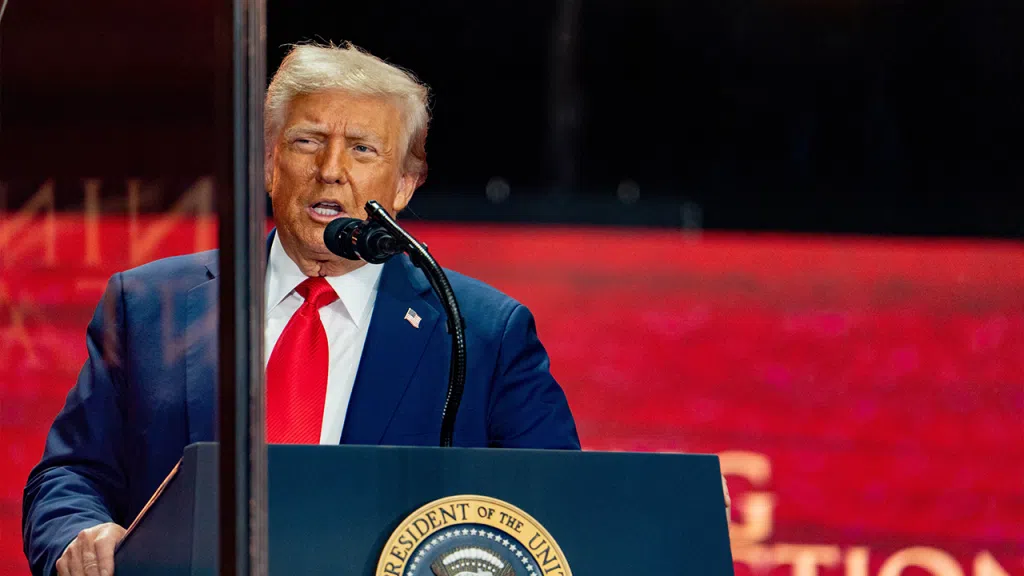
WASHINGTON D.C. ~ President Donald Trump addressed the nation in a televised prime-time speech Wednesday night, giving an update on the U.S. war with Iran.
Speaking from the White House, Trump said U.S. and Israeli forces are “meeting or exceeding” their military objectives in their offensive war with Iran, claiming the campaign has significantly weakened Iran’s ability to threaten the U.S. Trump repeated his prediction from Tuesday that major U.S. involvement could wind down within “two or three weeks,” and insisted Iran will never be allowed to obtain a nuclear weapon. U.S. and Israeli officials have raised claims that Iran has been near creating operational nuclear weapons for decades.
The address comes five weeks after the U.S. and Israel began launching airstrikes at Iran, which caused the latter to launch retaliatory strikes across the region and closed off the Strait of Hormuz to the U.S., Israel, and their allies. The conflict continues to roil global energy markets and raise questions at home and abroad about the war’s endgame, with a recent Pew Research Poll finding that 59% of U.S. adults disapprove of Trump taking military action against Iran.
The president repeated his demand that Iran negotiate an end to the war, or risk an escalation in U.S. attacks. Iran and Trump have contradicted each other throughout the conflict on whether direct negotiations have been held, with Trump claiming on Wednesday that Iran’s president wanted a ceasefire while Iranian officials consistently stated that no direct talks with the U.S. have been held.
The death toll in the region continues to rise, with U.S.-Israeli strikes killing over 1,900 people in Iran. Israel’s bombardment of neighboring Lebanon has killed over 1,300 people. Iran’s retaliatory strikes have killed dozens across the region in Kuwait, Israel, Iraq, Saudi Arabia, the United Arab Emirates, Jordan, and Qatar.