PODCAST:
Feb. 26, 2026 ~ Gov. Gretchen Whitmer reflects on her final State of the State address with Chris Renwick and Lloyd Jackson, discussing family, public service, and bipartisan efforts.
Feb. 26, 2026 ~ Chris Renwick and Lloyd Jackson speak with State House Speaker Matt Hall, who discussed the governor’s recent speech, bipartisan efforts, and tax reform plans for Michigan residents and businesses.
Feb. 26, 2026 ~ Chris Renwick and Lloyd Jackson discuss Governor Whitmer’s final State of the State address, Stellantis’ financial struggles, and the Pistons’ recent win against Oklahoma City.
Feb. 26, 2026 ~ Chris Renwick and Lloyd Jackson discuss Gov. Gretchen Whitmer’s State of the State address with State Sen. Michael Webber. They talk about Michigan’s economy, education, housing, and mental healthcare.
Feb. 26, 2026 ~ Chris Renwick and Lloyd Jackson discuss Gov. Gretchen Whitmer’s State of the State address with Oakland County Executive Dave Coulter and Macomb County Executive Mark Hackel. They focus on local impact and regional growth.
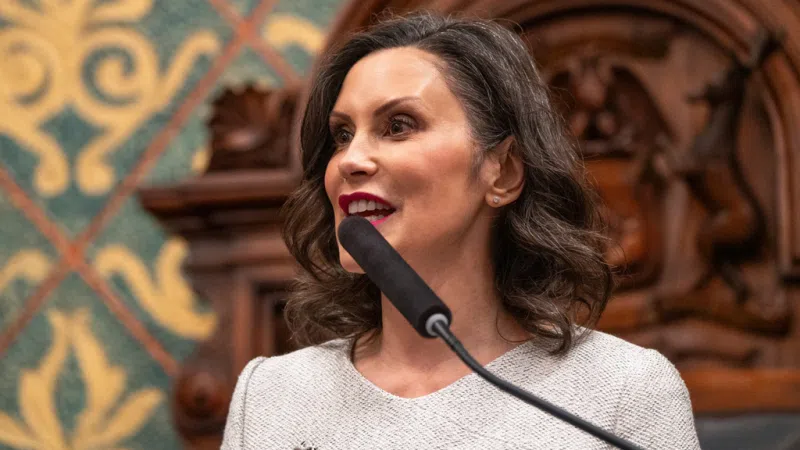
LANSING, Mich. — Gov. Gretchen Whitmer used her eighth and final State of the State address Wednesday to push a concentrated agenda on literacy, housing affordability, and health‑care costs, describing 2026 as a year to “show the rest of the country how we work together to get things done.”
Whitmer highlighted Michigan’s low reading performance, noting the state ranks near the bottom in fourth‑grade literacy. “This is a serious problem. Our kids deserve better,” she said, urging lawmakers to support earlier reading instruction, phonics‑based teaching, and expanded tutoring. Her budget proposal includes a $625 million literacy investment, which she called the largest targeted effort in state history. “Literacy is an ordinary superpower that every child deserves.”
VIDEO
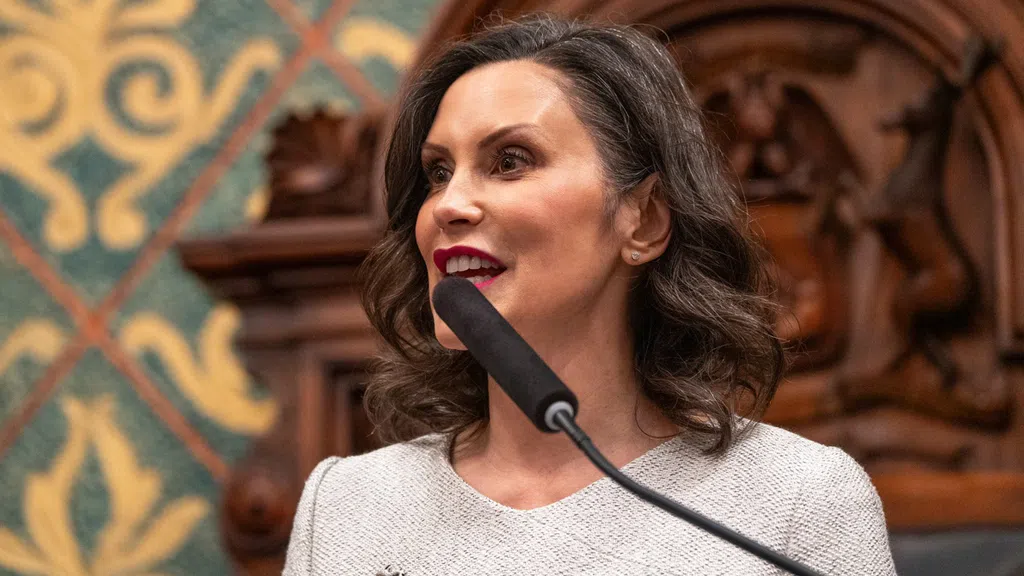
Feb. 25, 2026 ~ Governor Gretchen Whitmer delivered her final State of the State Address in front of a joint session of the Michigan Legislature Wednesday evening in Lansing. Her remarks focused on improving grade school literacy, addressing the housing shortage, and making health care more accessible and affordable.
(CONTINUED) She also called for a state‑level affordable housing tax credit and modernized zoning rules, arguing, “It shouldn’t be so hard to build the homes people need in the places where they want to live.” Reporting shows Whitmer has been meeting with bipartisan lawmakers on zoning and housing reforms aimed at increasing development.
On health care, Whitmer criticized rising costs and the lapse of federal ACA subsidies. “It shouldn’t be so hard. It shouldn’t be so maddening. And it really shouldn’t be so damn expensive,” she said, backing proposals to cap medical‑debt interest, remove medical debt from credit reports, expand hospital financial‑assistance programs, and prohibit foreclosures tied to unpaid medical bills.
Whitmer closed by reflecting on the challenges Michigan has faced during her tenure, invoking a theme of resilience that she said defines the state. “Tough times don’t last, but tough people do,” she told lawmakers. She ended by thanking her family and constituents. “Because of you, the state of our state is strong, and because of you, I know it always will be. Big Gretch out!”
Republican Reaction
In the official GOP response, Senate Minority Leader Aric Nesbitt argued that Michigan is worse off today than when Whitmer took office, framing her address as disconnected from outcomes on the ground. Speaking from his family’s farm in Lawton, Nesbitt said, “Eight years ago, Governor Whitmer promised to fix the damn roads. Yet, despite a nearly 50% increase in state spending, higher taxes, and a $9 billion surplus, less than 10% of roads have been repaired.” He also criticized her administration’s handling of the pandemic, saying it “lost more than $8 billion to unemployment fraud” while families struggled.
Nesbitt pointed to education setbacks and said Whitmer’s renewed focus on literacy comes “about time,” arguing that “a staggering majority of our students can’t read at grade level,” and accusing her of gutting standards and vetoing recovery efforts. He closed by urging a shift in direction, calling for Michigan to “cut the fat, slash the bureaucracy, rethink how we operate, and make Lansing work for the people it serves.”