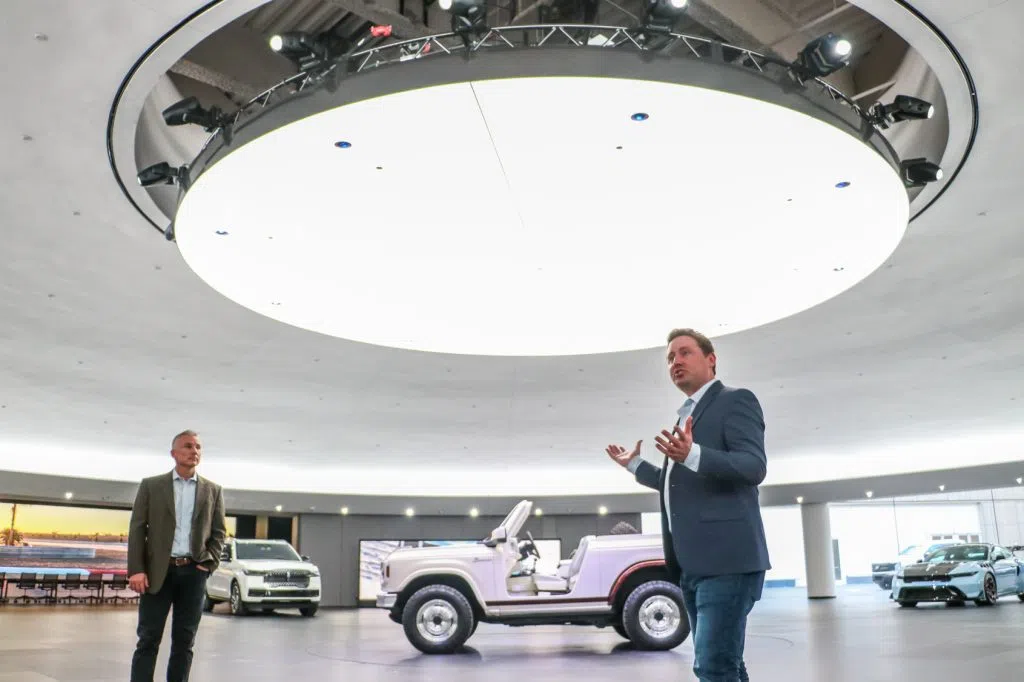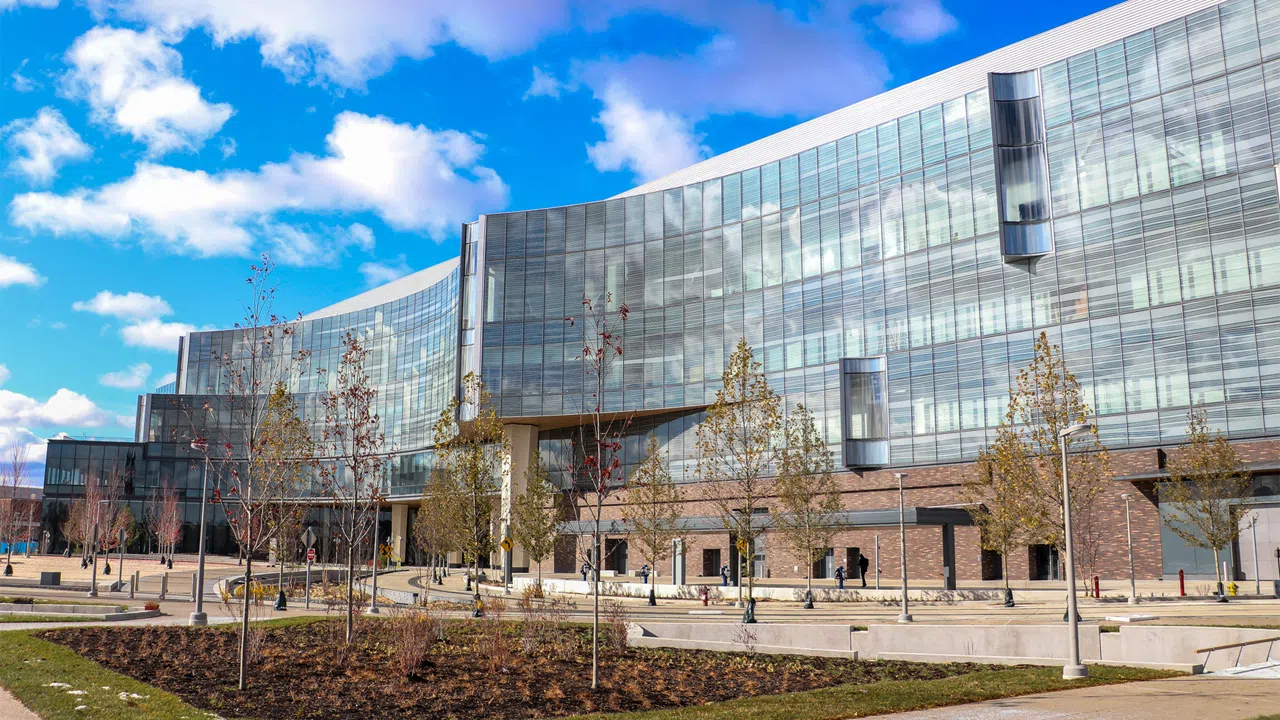
DEARBORN ~ For the first time in about 70 years, Ford Motor Co. workers have a brand new location to work from.
A sprawling, 2.1 million square-foot building at four-floors high, the new Ford World Headquarters, also called The Hub, is expected to be completed in 2027, starting a new era for the automaker. However, the building already houses many operations and employees, along with key amenities. Recently, representatives from Ford and construction company Barton Malow took members of the media on a tour through the new building, showing off features for both guests and workers alike.
PODCAST:
Nov. 18, 2025 ~ Jennifer Kolstad, Ford‘s global design director, joins Chris Renwick, Lloyd Jackson, and Jamie Edmonds to discuss the design of the massive new global headquarters in Dearborn. Photo: Mandi Wright ~ USA TODAY NETWORK
(CONTINUED) The Hub will replace the iconic Glass House, built in 1956, that stands at 12 floors and 950,000 square feet, meaning the new headquarters more than doubles the space used in the Glass House. Ford relocated its base of operations to the site of the former Ford Product Development Center in Dearborn.
Many amenities are housed in the new HQ, including various types of workspaces, some built into staircases, that aim to drive productivity and collaboration, said Ford Land CEO Jim Dobleske. There are 14 what Ford calls “arrival areas” around the building for workers, suppliers, and others to converse at, along with multiple courtyards.
Culinary options at Ford HQ have also greatly expanded for both workers and visitors. A large-scale food hall, featuring a rotating menu crafted by Grant Vella, executive chef for Ford HQ, provides a diverse range of cuisines to reflect the international visitors that come through the headquarters.
An overhanging theme of the structure is allowing large amounts of natural light into the premises, not just in the lobbies, but for workers as well. Sean Corriveau, global design studio director at Ford Land, said that vehicle design studios were created with letting in more natural light in mind. This meant moving the studio up higher in the building, allowing more light in the spaces while making it harder for prying eyes to peer through the windows and see the company’s future products in development. Thousands of Ford ovals and the company’s past patent numbers are printed onto the glass of the studios’ windows to further obscure the view of the studio from the outside.
Freight elevators connect the studios to the lower workshops, where clay and foam models of vehicle prototypes are sculpted. Here, the company uses refurbished machines from as far back as the 1940s to help create these models.
“It’s not just a building. This is a space that is a tool for our employees to be more productive, to be more collaborative, and really help deliver the Ford Plus plan,” Dobleske said.